J’ai appris il y a peu de temps que Jean-Pierre Cometti était décédé le 4 janvier 2016. Un philosophe d’une générosité hors normes et d’une curiosité sans bornes, c’est une vraie perte pour le monde de la pensée, et pour le monde tout court.
Je vous invite à lire l’excellent témoignage de Joëlle Zask, intitulé “Jean-Pierre Cometti, l’ami“:
“Sans aucune suffisance, sans jamais se mettre en avant, avec une grande modestie, une excellente écoute, une capacité hors norme de lecture, il savait donner une chance aux êtres et aux idées… [lire la suite]”
I will be presenting a lecture entitled “Writing Revolution: Whitman’s Literary Democracy” at the Society for Critical Exchange‘s Winter Theory Institute, which will take place at the Slought Foundation in Philadelphia on February 4-7. The flyer for the conference, which is on “American World Literature,” can be downloaded here.
Excerpt:
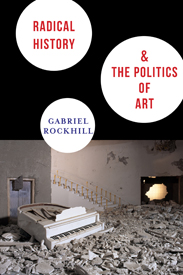
“Radical History is an engagingly written book that is full of insight, and which judiciously and forcefully combines readings of some of the most cited critics on art and politics in the twentieth century. As such, it makes a new, demanding inquiry into the appropriate methodology for rethinking politicized aesthetic practices… [read more]”
The presentation below, which took place on October 26, 2015, was recently posted as part of Penn State’s Comparative Literature Luncheon Series. It is a work in progress that will likely become part of a larger book project on recording technologies, so comments and suggestions are very welcome. A special thanks to Jonathan Eburne for the invitation and the very productive dialogue.
Abstract
“Remaking Machines: Pragmatics and Politics of Photography”
“The only sensible weapon against the cops,” Chris Marker presciently claimed in the 1960s, is “a film camera.” Exploring the ramifications of this statement in the context of the current struggles around the racial violence perpetrated by the police and vigilantes, this paper proposes a broad reflection on the social pragmatics of photography and its consequences. It begins by revisiting the question ‘what is photography?’ by inquiring into its supposed privileged relationship to the objective world. It argues that photography, far from simply capturing reality, is a powerful remaking machine that recomposes the very nature of the real. By resituating the photographic apparatus in a broad social pragmatics, it thereby seeks to elucidate its political power as a “sensible weapon.”


 GABRIEL ROCKHILL